No, it wasn’t built by the Eatons as a summer place for management. No, it didn’t have a dining pavilion or a dumb waiter or trunk rooms.
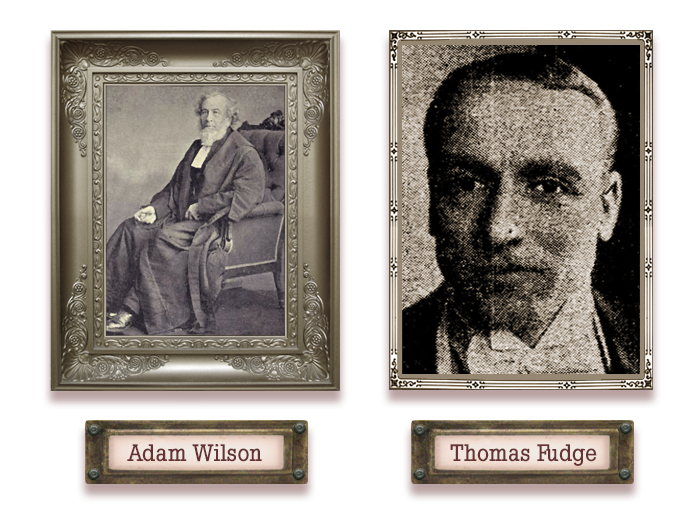
15–21 Glenfern’s story began in 1853, when lawyer and future Toronto mayor and chief justice of Queen’s Bench Adam Wilson acquired a 51-acre country estate east of Toronto, in an area that would later take the name of his cottage, Balmy Beach. In 1876, Wilson subdivided much of his land to create semi-rural “villa lots” for the upper class. A decade later, real estate speculators Robert Donaldson, William Banks, and Frederick Philpott purchased a southeast portion of Wilson’s estate and registered Plan 732, laying out smaller, more profitable “cottage lots” on the newly created Glenfern and Balmy Avenues.
The lakefront land designated as Lot 2, the future site of 15–21 Glenfern, changed hands frequently among local brokers and investors, among them Henry Pellatt, a son of William Gooderham, and a millionaire spinster in Edinburgh. In 1904 the parcel, then containing two cottages, a wood-frame house and a wood-frame summer boarding house, was purchased by musician and impresario Thomas Fudge. Five months later, he sold it to his father-in-law, James Gardiner.
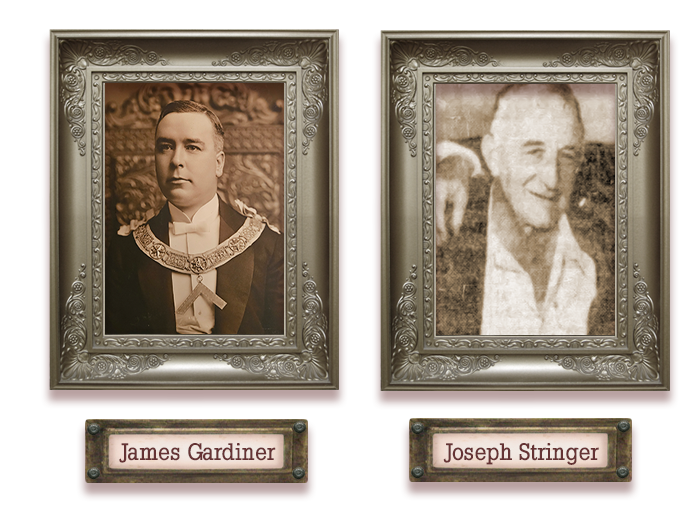
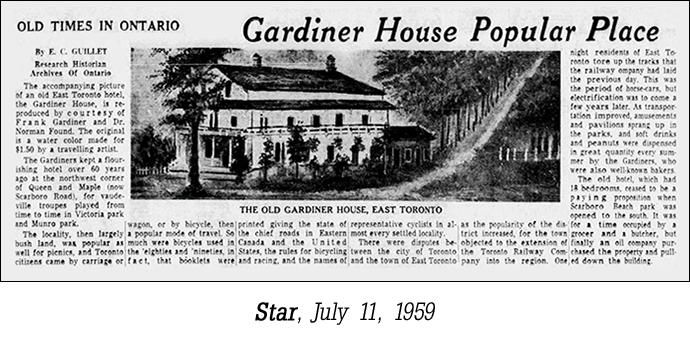
James and his brothers were well-known Toronto bakers and confectioners who also managed the nearby Munro Park and Victoria Park amusement parks. James and Fudge retained the cottages on Lot 2 and ran the boarding house. Around 1907, they named this venue Marathon House, perhaps to capitalize on the running craze surrounding Olympic runner Jack Tait, who spent his summers next door at the Balmy Beach Harriers boarding house. When James Gardiner died in 1913, the property passed to his widow, Susan. The Marathon continued to operate for nearly two decades.
In mid-1925, the Gardiner estate proposed to replace the Marathon and the other buildings on the site with a 20-suite apartment house with garages. The project faced stiff neighbourhood opposition, and city bylaws also prohibited apartments on the lakefront. Toronto’s civic property committee overruled the objections, and in March 1926 granted a building permit to the estate of James Gardiner for a project valued at $45,000 (though the garages were denied). Although Susan Gardiner was sometimes listed as the owner, her son George Lawrence Gardiner, a local businessman and prominent Mason, likely oversaw the project.
Glenfern was designed by Archibald Joseph Stringer, head of the architecture and design department at Central Technical School. Stringer was a longtime Beach resident involved for many years in St. Aidan’s church (for which he designed the Memorial Hall in 1922), the Balmy Beach Club, the Beach Lawn Bowling Club, and the Beaches Lodge of Freemasonry. He designed a number of homes, stores, church and Salvation Army expansions, and at least one factory in and around Toronto, but we know of only the one apartment house. For Glenfern he drew on Edwardian Classicism with Neo-Tudor influences, with simple, balanced brick detailing and open sun porches with “Tudor” panels. Suites were advertised as “the most homelike apartments,” with a park and bathing beach. Each featured a Murphy bed, a breakfast room (not the fabled “trunk room”), terrazzo flooring in the bathroom and fashionable linoleum in the kitchen, and hardwood flooring, crown moulding, panel moulding, and picture and plate rails. Construction took roughly six months, and the Glen Fern Apartments opened to renters in September 1926, with rents around $50.
Following Susan Gardiner’s death in 1939, her heirs transferred the property to the Canada Trust Co. to settle estate debts. Thus began a half-century of real estate speculation. Notable owners included clergyman Charles Steinmetz (1950) and Michael Overs, the founder of Pizza Pizza (1976). In 1983, York University professor Howard Adelman bought the property via a limited partnership. After Adelman faced charges in 1989 for unlawful apartment sales under the Rental Housing Protection Act, a group of new buyers organized an ad hoc board. Despite resistance from the City of Toronto, which wanted to preserve rental housing stock, in 1990 the owners’ lawyer successfully submitted a “foolproof” application that converted the building into a legal co-ownership model that continues today.
Read more about the history of Glenfern:
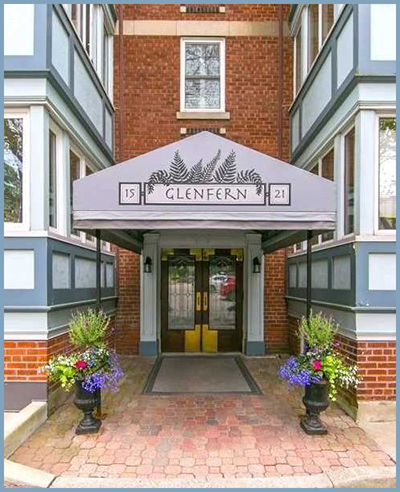
Download (Adobe PDF)